Security
Scan dependencies on your own server
Dependency vulnerabilities should surface in your pipeline, not in production. Phelix scans the Go and Rust dependencies of an application against OSV.dev advisories, locally and read-only, and turns the result into an exit code your CI can trust.
Released Phelix hosts: Linux and macOS. Builds Go and Rust with your host toolchain.
simulated
the scan runs locally and read-only
Scanning that stays on the host
The manifests are read in place; nothing is built, installed, or changed.
There is no scanner service to subscribe to and no agent to install. The scan parses your dependency files where they lie, resolves Go versions from the module cache your builds already warmed, and records each run under the data directory you control. The one network call sends ecosystem and package names to OSV.dev for advisories, and the dashboard sees nothing until an application opts in. The scanning docs spell out exactly what travels and what stays.
Use the scan before a release and after dependency changes so its evidence describes the application you plan to run. Check which files and resolved versions were covered, and review advisory access before interpreting a report with no findings. A local workflow keeps project files on the host, while advisory queries still disclose the package information described in the documentation.
phelix security scanphelix security reportphelix security scanFindings you can act on
Every finding names what the scan could prove, and what it could not.
A dependency is reported as affected only when its resolved version is established and lies inside the advisory range. When the scan knows less, it says so: manifest minimums report as potentially affected with the reasoning attached, and anything undecidable is reported as unknown rather than silently cleared. Coverage is part of the record, so an offline run never presents itself as clean. That honesty is what makes the exit code usable as a gate rather than a formality.
Review severity alongside the quality of the version evidence and the dependency role in the application. Prioritize established affected versions, investigate potential matches, and keep unknown results visible. A report about known advisories can guide an update decision, but it cannot establish that the application has no other security issues or that an update has no compatibility cost.
phelix security report api --previousA gate, then a schedule
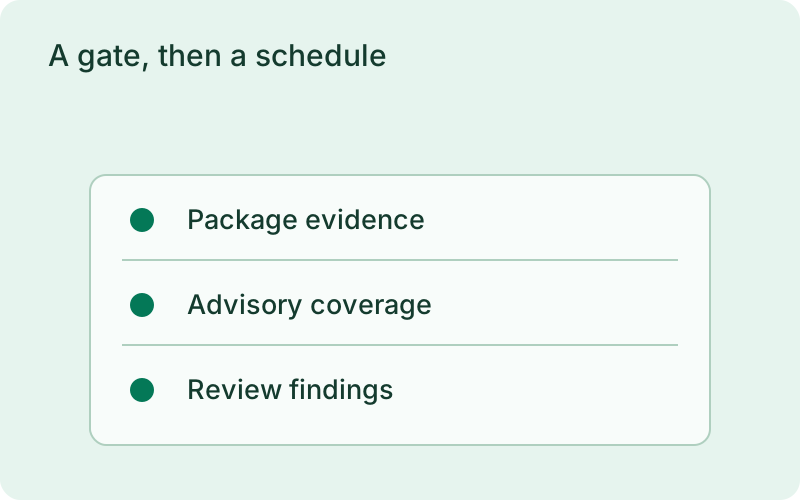
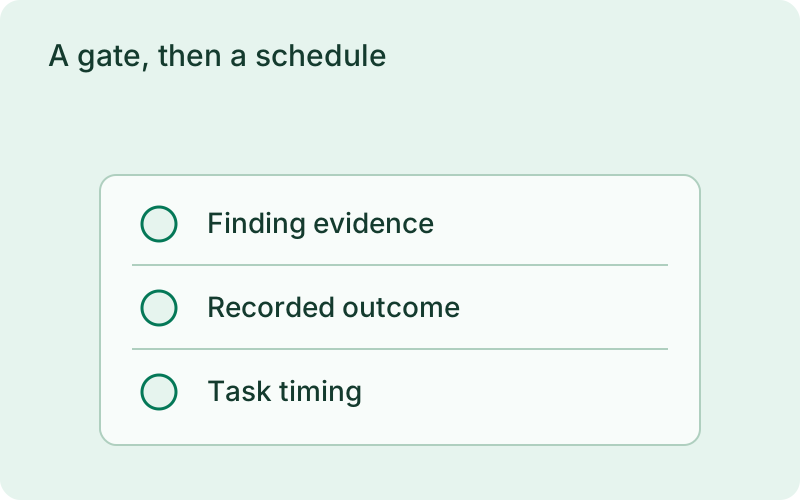
The threshold makes the scan a CI gate; the monitor daemon makes it a habit.
In a pipeline, exit 25 means findings reached the configured threshold and exit 30 means the advisory source was unreachable, so a failing gate and an unchecked project are never the same signal. Thresholds and intervals are set with flags that edit phelix.yaml in place, preserving unrelated configuration and comments. Scheduled scans run through the monitor daemon for applications that enable them, and remote access to reports passes the host authorization boundary after a per-application opt-in. The full model, failure handling, and exit-code contract live in the scanning docs.
Give failed scans and scheduled findings an owner who can decide the next step. If advisory access fails, make that gap visible in the release decision rather than quietly skipping the check. Compare later reports with the earlier record so newly published advisories and unresolved existing findings can be followed without losing their context.
One binary between git push and production.
Install the CLI, verify the host, and follow the quick start to build your first application.