Feature
Dependency vulnerability scanning
A known vulnerability in a dependency is a production problem discovered too late. Phelix scans the Go and Rust dependencies of an application against OSV.dev advisories, locally and read-only, reports what it can prove, and turns the result into a gate your pipeline can branch on.
simulated
manifests parsed in place · nothing built, nothing downloaded
Local, read-only, honest about gaps
The scan parses dependency files in place: nothing is built, nothing is installed, and no dependency file changes. Go versions are resolved authoritatively with the module graph already in the local cache, so a warm cache from normal builds answers offline; without a usable toolchain the scan degrades to manifest evidence and says so. The advisory query sends ecosystem and package names to OSV.dev, and each run records itself under the Phelix data directory. An offline run that could not check every package reports partial coverage and never presents itself as clean.
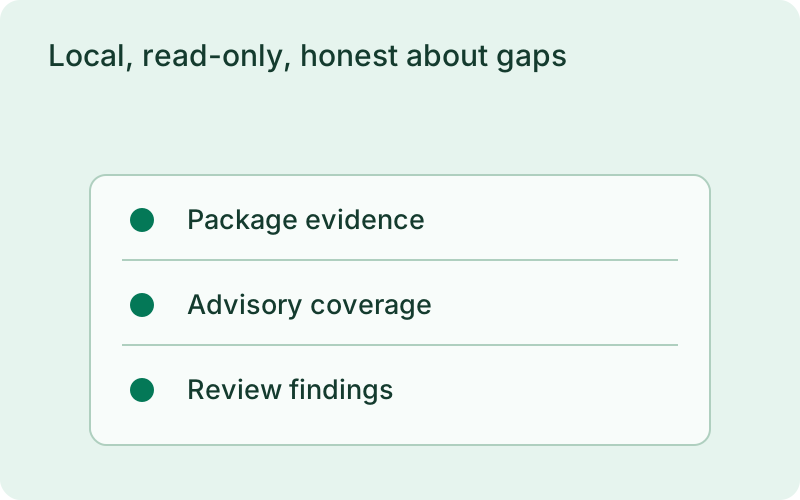
The local scan gives you a dependency review without moving the project into another management service. It still needs advisory access to identify known issues, and its report should be read with coverage and freshness in mind. Keep that scope clear: application dependency evidence does not describe every risk in the server or the application.
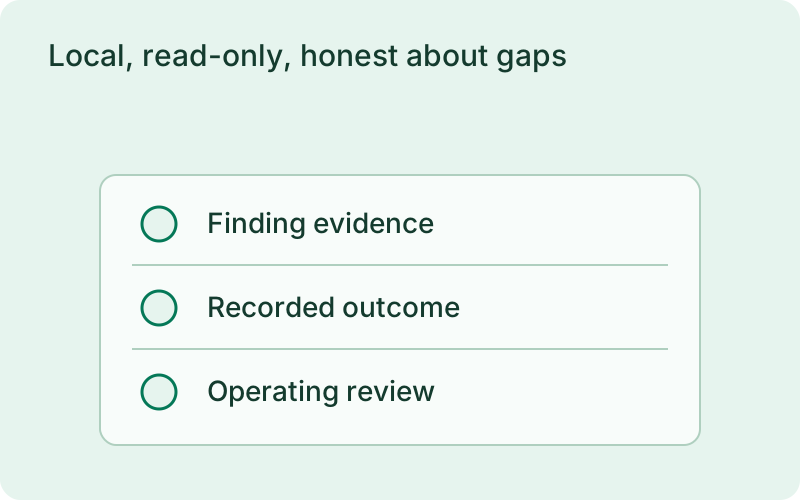
- No build, no install, no dependency changes
- Advisory lookups send package names only
- Partial coverage is labeled, never silently clean
phelix security scanphelix security reportsimulated
exit 0 below the threshold · exit 30 only when advisories cannot be checked
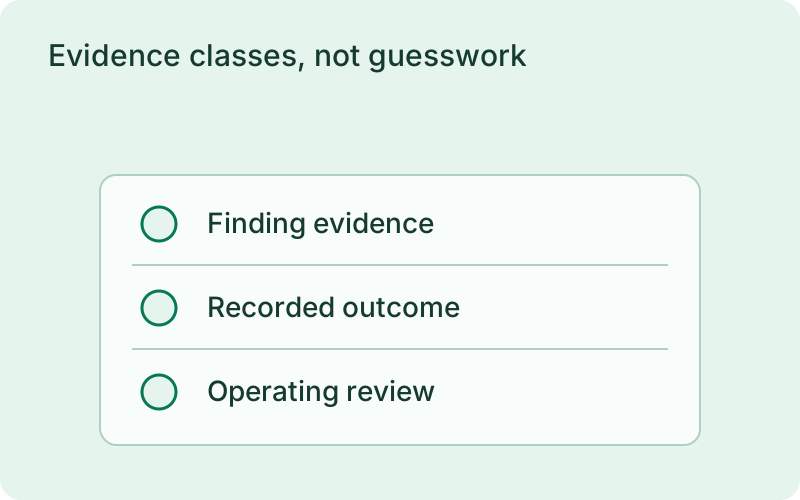
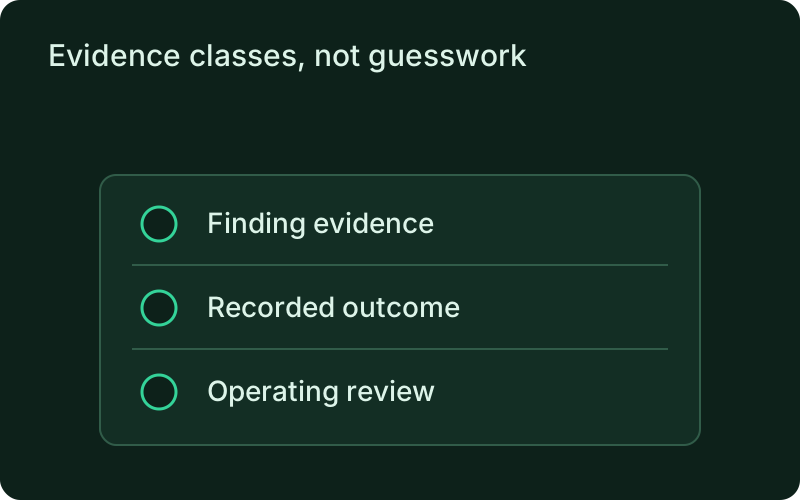
Evidence classes, not guesswork
A dependency is affected when its resolved version is established, through a lockfile, a pinned directive, or the resolved module graph, and lies inside the advisory range. When only manifest minimums are known, the finding reports potentially affected with the reasoning attached. Anything the scan cannot decide is reported as unknown rather than silently cleared, and reachability is always unknown. The report tells you what was proven and what was not.
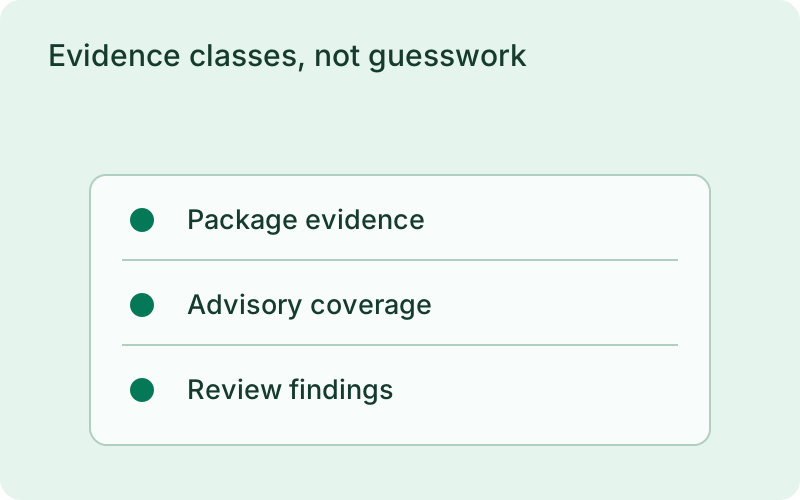
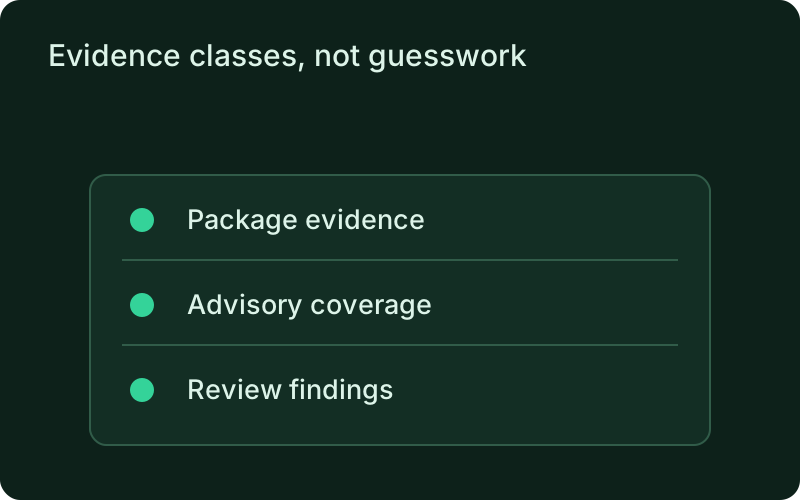
Evidence classes help you decide the next useful action. An affected resolved version can be reviewed for an update; a potential match needs its actual version established; an unknown result needs the missing information investigated. Prioritization should also consider whether the dependency participates in an exposed operation, while uncertainty remains visible in the record.
simulated
advisory lookups send ecosystem and package names · nothing else leaves
A gate for CI, a schedule for the daemon
A scan exits 25 when findings reach the configured threshold, which makes the command a usable CI gate; a scan that could not reach the advisory source exits 30 instead, so findings found and could not check never share an exit code. Thresholds and intervals are edited in place with flags that preserve unrelated configuration. Scheduled scans run opt-in through the monitor daemon, and the dashboard reaches reports only after an application opts in. Remote mutations pass the same host authorization boundary as every other operation.
Connect the release check to a review process that someone owns. Decide which findings stop a release and how an unreachable advisory source is handled. Scheduled scans help expose newly published advisories after deployment, but a schedule only helps when its failures and findings reach a person who can decide what to change.
Frequently asked questions
Short answers; the docs go deeper.
Does the scan send my code anywhere?
No. Dependency files are parsed in place and the scan record stays on the host. The advisory query sends ecosystem and package names to OSV.dev, and dependency data reaches the dashboard only after the application opts in; with reporting disabled, remote security operations are refused.
What does exit 25 mean in a pipeline?
The scan itself succeeded and its record is persisted, but open findings reached the configured threshold. Exit 30 means the advisory source could not be reached, so a gate never passes on a project that could not be checked.
Is this a SaaS vulnerability scanner?
No. Scans run locally and read-only on the host you control, records live under the Phelix data directory, and the command works offline from a warm module cache, with partial coverage labeled rather than hidden.
One binary between git push and production.
Install the CLI, verify the host, and follow the quick start to build your first application.