Feature
Deployment lifecycle hooks
Give each release step a place in the deployment. Hooks run your commands before and after the relevant lifecycle changes, with time limits, retries, captured output, and remote execution.
Illustrative workflow
Run the right step at the right point
Use pre-build and post-build hooks around compilation, pre-deploy before changing instances, and post-start after the candidate passes health checks. Pre-traffic warms or checks a candidate before proxy traffic moves; post-deploy records follow-up work after the release is committed. Pre-stop and post-rollback cover draining and recovery. Classic deployments skip pre-traffic because they have no separate traffic activation step.
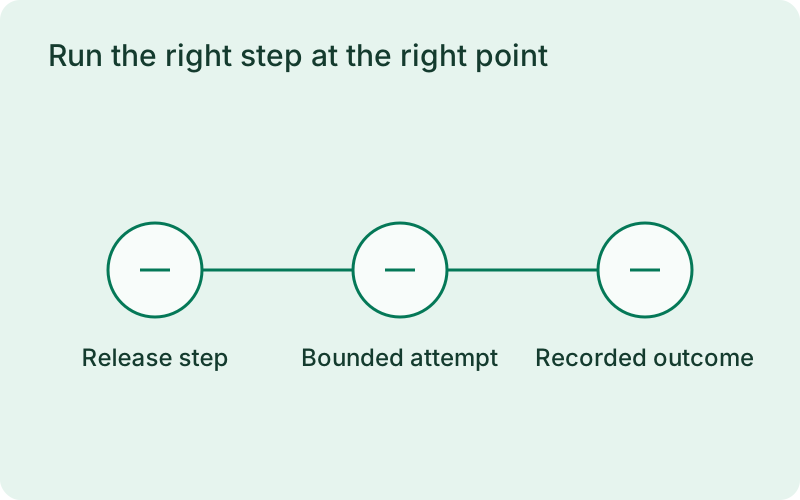
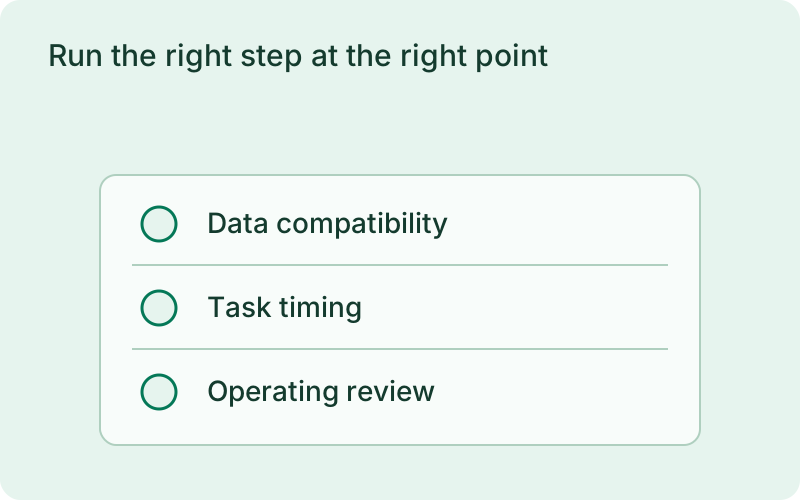
Use hooks for steps whose timing changes the safety or usefulness of a release. A compatible migration belongs before the new instances depend on it, while a cache warm-up belongs before customer traffic reaches the candidate. Keep each hook focused so its result explains one responsibility rather than hiding a whole release script inside a single step.
Make failures visible and bounded
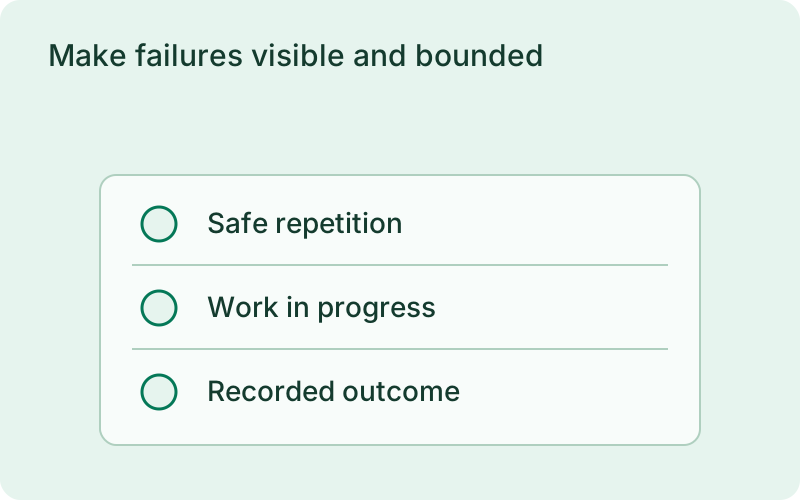
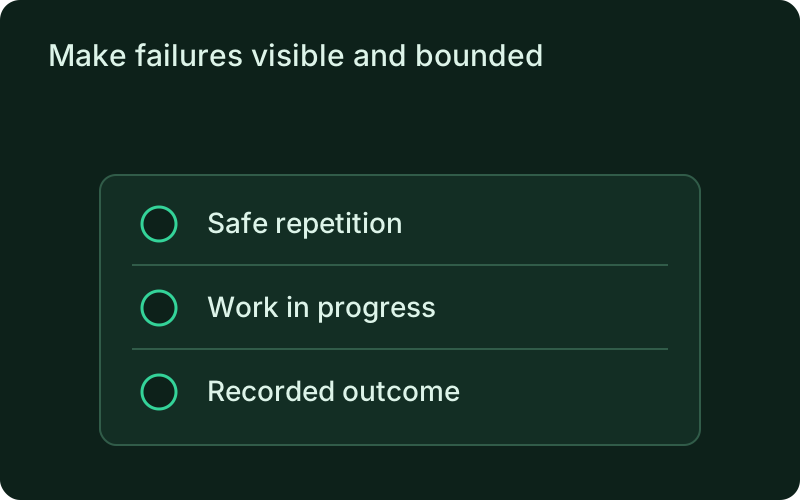
Each hook has a timeout, bounded retries, and an explicit failure policy. Critical failures stop the operation and use its normal recovery path. Post-deploy and post-rollback failures are recorded without reversing an already committed outcome. Execution history records the command, version, timing, exit status, and redacted output. A completed attempt stays recorded; an interrupted attempt is marked uncertain and is not automatically repeated.
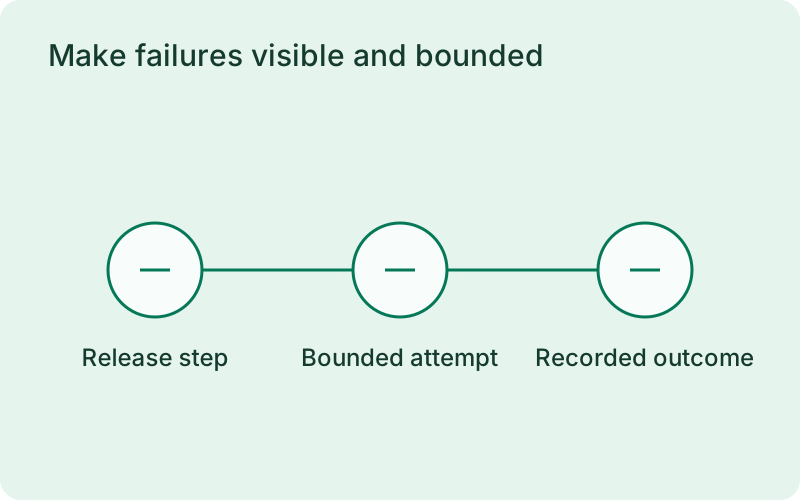
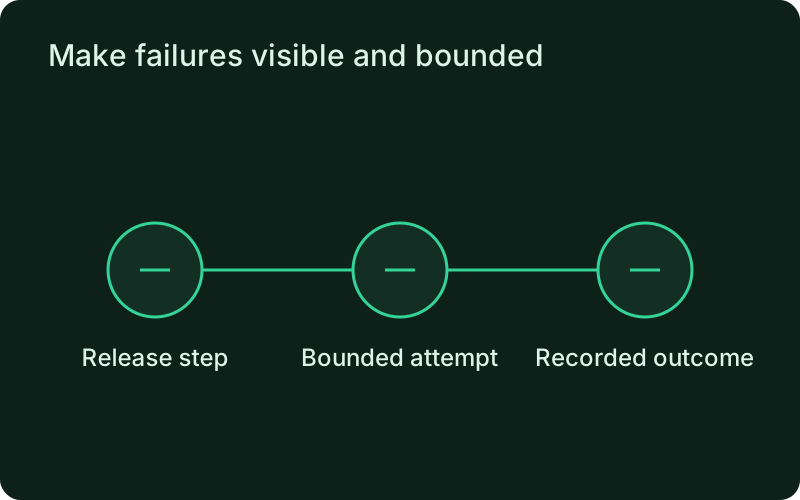
Choose retry behavior based on the side effect, not merely the likelihood of a transient failure. A repeated notification may be harmless while a repeated financial or data operation may not be. Timeouts make failures visible, but an interrupted command can already have changed an external system. Inspect the recorded result before deciding whether another attempt is safe.
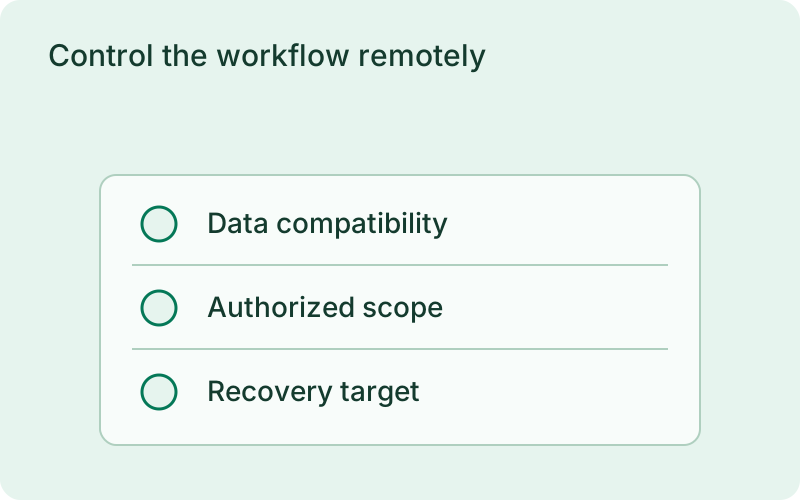
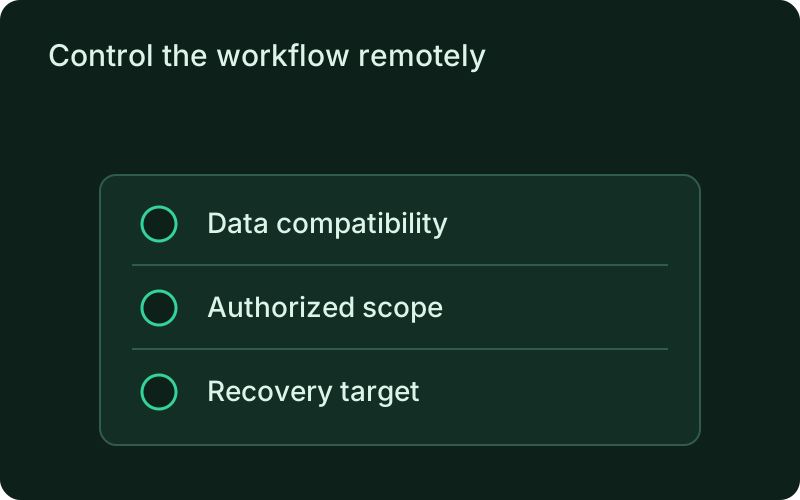
Control the workflow remotely
Inspect configuration, status, history, and captured output through the connected monitor. Request remote hook execution under the host authorization rules without wrapping the deployment in an external script. Keep migrations compatible while old and new versions overlap. Rollback restores the application binary, not the database schema. Side effects must be safe to repeat.
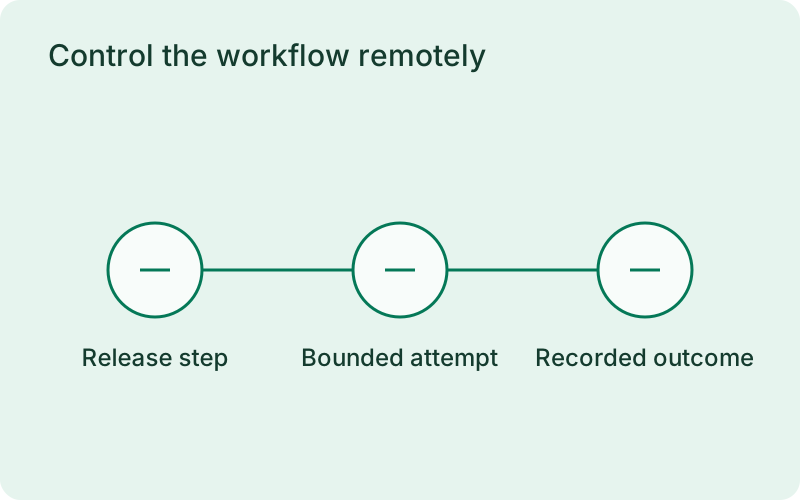
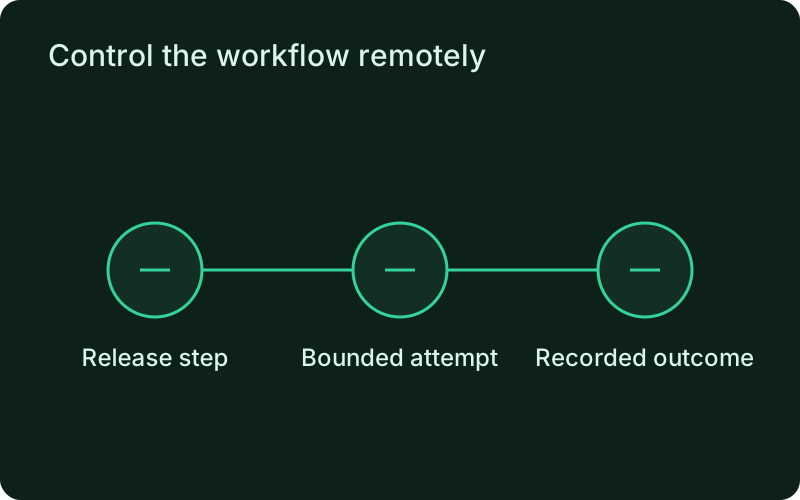
Remote inspection gives the person on call the same execution evidence without requiring a new release. Keep that access under the host rules and review uncertain outcomes before rerunning them. Application recovery restores the release artifact; it does not reverse a migration or any other external work a hook performed, so compatibility must be planned separately.
Frequently asked questions
Short answers; the docs go deeper.
Can a notification failure undo a release?
Post-deploy hooks run after the release is committed. Their failures are recorded and do not undo it.
One binary between git push and production.
Install the CLI, verify the host, and follow the quick start to build your first application.